
Class 9 Science Chapter 8: Journey Inside the Atom — Solutions
These Class 9 Science Exploration Chapter 8 solutions cover Journey Inside the Atom from NCERT’s Exploration, first edition April 2026 (printed pages 140–161).
Class 9 Science Exploration Chapter 8 Solutions – Overview
Chapter 8 of Exploration, Journey Inside the Atom, traces how scientists discovered that the atom is divisible. It covers the subatomic particles (electrons, protons and neutrons), the atomic models of Dalton, Thomson, Rutherford and Bohr (including the gold foil experiment), atomic number and mass number, electronic configuration and valency, and the ideas of isotopes and isobars. The worked answers distinguish historical atomic models, shell capacities, mass number and isotope masses.
Key Concepts & Definitions
Subatomic particles: electron (negative, around the nucleus), proton (positive, in the nucleus), neutron (no charge, in the nucleus).
Atomic number (Z): number of protons. Mass number (A): protons + neutrons.
Number of neutrons = A − Z; in a neutral atom, electrons = protons = Z.
Electronic configuration: electrons fill shells K, L, M… (shell capacities given by 2n2: K = 2, L = 8, M = 18…; the first 18 elements occupy shells up to 2, 8, 8). Valency = electrons gained, lost or shared (often 8 − valence electrons for non-metals).
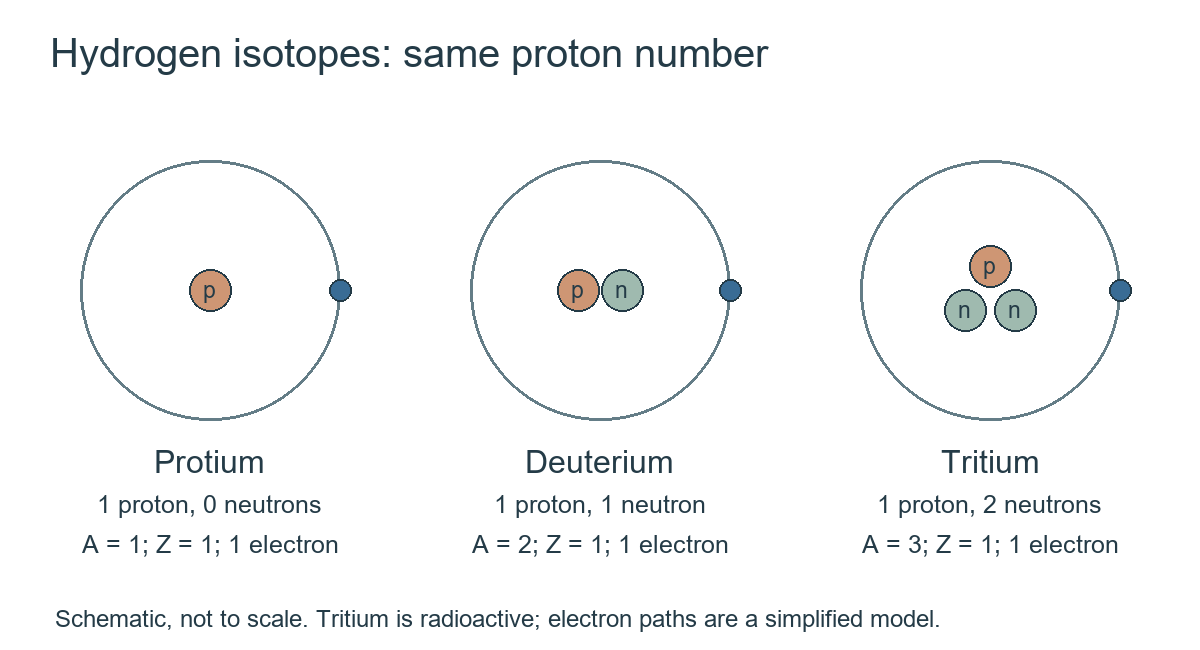
Isotopes: same Z, different A (different neutrons). Isobars: same A, different Z.
Bohr’s model: electrons revolve in fixed energy orbits without losing energy, so the atom is stable.
“Think It Over” — Answers
Are atoms the smallest particles, or can they be divided further?
Why do the electrons not fall into the protons in the nucleus?
Atomic notation and model limitations
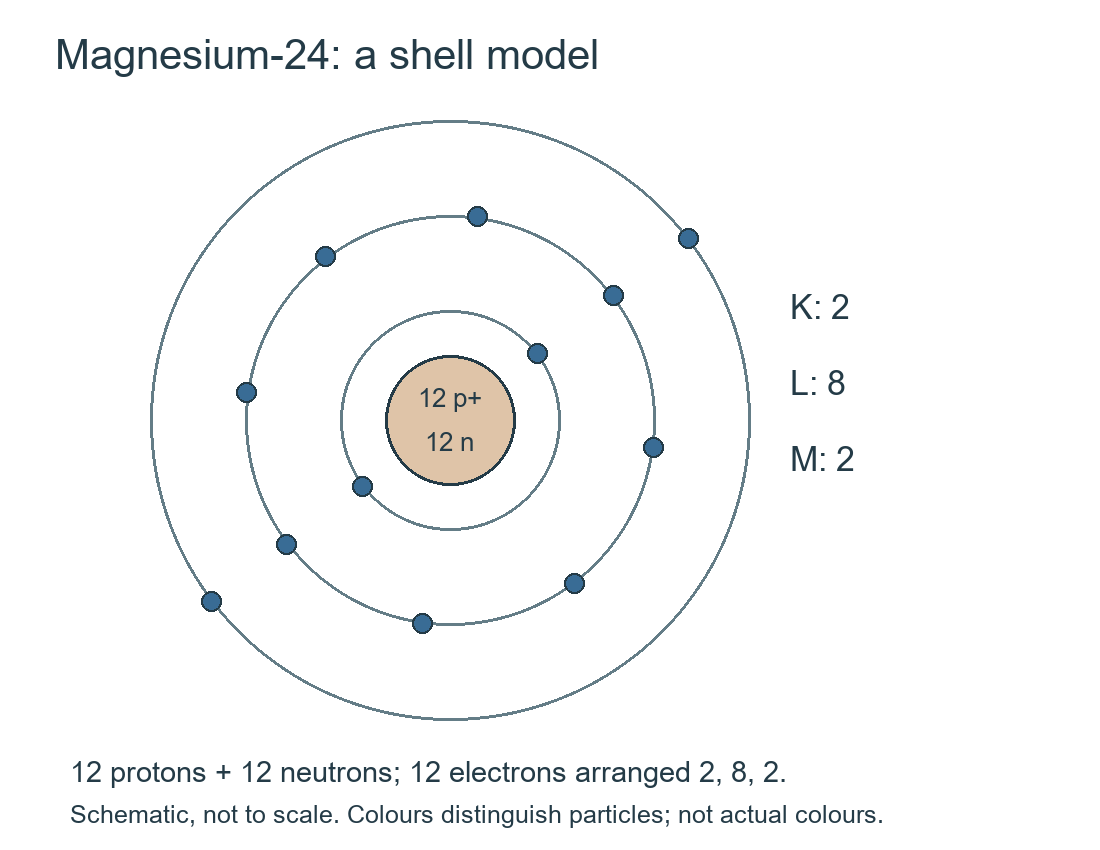
Shell capacity is not a universal rule to fill every shell completely before starting the next. The chapter’s simple distributions apply to its first 18 elements. Bohr diagrams are useful counting models; modern electrons do not follow these drawn circular tracks.
Weighted average atomic mass
Using the textbook’s simplified chlorine masses and 3:1 abundance:
This is an average across atoms, not the mass number of one chlorine atom. Actual isotope masses and abundances give a slightly different standard atomic weight.
Think It Over: Why change atomic models?
New evidence exposed limitations: electrons contradicted an indivisible atom, alpha scattering required a small nucleus, and atomic stability required more than a classical planetary picture. Models are revised when experiments or explanatory limits demand it.
Pause and Ponder: Answers 1–18
- (i) Excess negative charge makes the model negatively charged. (ii) Adding negative charge to the clay also prevents neutrality unless balanced by positive charge elsewhere.
- An orange or lemon can illustrate inclusions inside a larger body, but seeds and pulp do not reproduce electric charge, atomic scale or the distribution of electrons. It is an analogy.
- Cathode-ray properties did not depend on the electrode material or gas, suggesting electrons are components common to atoms.
- A negative projectile is attracted toward the positive nucleus, rather than repelled like an alpha particle. Its mass and energy also affect scattering, so changing only the charge does not fully specify an experiment.
- A few very large deflections require a strong, concentrated repulsive interaction; diffuse positive charge in Thomson’s model could not account for them.
- Sample question: How did you distinguish nuclear scattering from other effects in the foil?
- Option (ii): both statements are true; Thomson’s description is not the reason for Rutherford’s nuclear conclusion.
- Sample: a student named Anaya might propose “Anayium”, Ay. A capital first letter and lower-case second letter follow symbol style, but a classroom proposal is not an officially approved element name or symbol.
- Different symbols for the same element would make scientific communication and formula interpretation unreliable.
- 26 electrons, 26 protons and 30 neutrons.
- 41 − 20 = 21 neutrons.
- 17 + 18 = 35.
- 23 − 11 = 12 neutrons, assuming a neutral atom.
- C: 4; F: 7; Si: 4 valence electrons.
- Z = 12: 2, 8, 2; Z = 16: 2, 8, 6; Z = 18: 2, 8, 8.
- Sodium-23, with 12 neutrons. Sample riddle: I have Z = 8 and A = 16; my neutral atom has eight electrons and eight neutrons. I am oxygen-16.
- Both are sodium, Z = 11. Their mass numbers are 23 and 24, so they are isotopes.
- Use the given hypothetical abundances, rather than substituting remembered natural values:
Explorations and sample activities
Thicker foil: multiple scattering and energy loss become more likely; fewer particles pass straight through, and a sufficiently thick foil can stop them. A thicker foil is less suitable for attributing a trajectory to a single scattering. Radioactive-source experiments require specialist facilities and must not be reproduced as classroom handling activities.
The paper-thickness estimate is about one million atomic diameters, not an exact atom count for real paper. For Table 8.4, common introductory valencies H to Ar are: 1, 0, 1, 2, 3, 4, 3, 2, 1, 0, 1, 2, 3, 4, 3, 2, 1, 0. Some elements exhibit other valencies in compounds.
Journey Beyond sample: build a prediction board using Z = 12, A = 24, p = e = 12 and n = 12; plot K/L/M electron counts for sodium (2/8/1), magnesium (2/8/2) and aluminium (2/8/3). A documentary response must name the film actually watched and separate its claims from questions left open; do not invent viewing or observations.
Class 9 Science Exploration Chapter 8 Solutions — Revise, Reflect, Refine
1. Choose the correct options and explain, in the context of Rutherford’s gold foil experiment. (i) The experiment clearly showed the existence of neutrons in the nucleus. (ii) The results disproved the plum pudding model and led to the idea of a nucleus at the centre of the atom. (iii) The large deflection of a few alpha particles indicated that most of the mass and positive charge are packed into a tiny centre. (iv) The way alpha particles were deflected showed that electrons move around the nucleus.
2. Which statements are correct or incorrect according to Bohr’s atomic model? Give a reason for each. (i) Electrons lose energy while moving in fixed orbits and slowly fall into the nucleus. (ii) Electrons can exist anywhere around the nucleus with no fixed energy. (iii) Electrons revolve around the nucleus in orbits of fixed energy without losing energy. (iv) Electrons can be found between energy levels as they move around the nucleus.
3. The nuclei of three species are: X (18 protons, 19 neutrons), Y (17 protons, 18 neutrons), Z (17 protons, 20 neutrons). Explain the relation between: (i) Y and Z (ii) Z and X
4. What conclusion did Rutherford draw about the position and characteristics of the atom’s positively charged part, based on the few alpha particles that bounced back or were deflected at large angles?
5. Arrange these in the correct chronological order to show how atomic models evolved. (i) Bohr’s model — electrons move in fixed orbits, each with a definite energy. (ii) Thomson’s model — the ‘plum pudding’ atom with electrons embedded in positive charge. (iii) Rutherford’s model — a dense central nucleus. (iv) Dalton’s model — atoms as indivisible particles.
6. Electrons move around the nucleus in orbits. Why do they not fly away from the atom? Explain what keeps them attracted to the nucleus.
7. Assertion (A): The discovery of subatomic particles helped in understanding atomic structure. Reason (R): The number of electrons is equal to the number of protons in an atom. Choose the correct option: (i) Both A and R are true, and R is the correct explanation of A. (ii) Both A and R are true, but R is not the correct explanation of A. (iii) A is true, but R is false. (iv) A is false, but R is true.
8. For a magnesium atom with mass number 24 and atomic number 12, find the number of (i) protons, (ii) neutrons, (iii) electrons, and illustrate the arrangement of electrons.
For the neutral magnesium-24 atom, Z = 12 and A = 24:
9. For the elements shown in Fig. 8.17, find: (i) name, (ii) symbol, (iii) total electrons, (iv) valence electrons, (v) valency, (vi) protons, (vii) atomic number.
| Fig. | Config | Name | Symbol | Total e− | Valence e− | Valency | Protons | Atomic no. |
|---|---|---|---|---|---|---|---|---|
| (a) | 2, 1 | Lithium | Li | 3 | 1 | 1 | 3 | 3 |
| (b) | 2, 5 | Nitrogen | N | 7 | 5 | 3 | 7 | 7 |
| (c) | 2, 8, 3 | Aluminium | Al | 13 | 3 | 3 | 13 | 13 |
| (d) | 2, 7 | Fluorine | F | 9 | 7 | 1 | 9 | 9 |
10. Both Rutherford’s and Bohr’s models have electrons orbiting the nucleus. Why did Rutherford’s model fail to explain atomic stability, while Bohr’s model succeeded?
11. An atom 70X has 31 electrons. How many neutrons are there in its nucleus?
“Atom” implies a neutral species, so protons equal electrons:
There are 39 neutrons.
12. An atom has 79 protons and a mass number of 197. Calculate (i) the number of neutrons, and (ii) the number of electrons.
(i) Neutrons:
(ii) A neutral atom has 79 electrons, equal to its 79 protons. The element is gold (Au).
13. Complete Table 8.5.
| Atomic number | Mass number | Neutrons | Protons | Electrons | Element |
|---|---|---|---|---|---|
| 5 | 11 | 6 | 5 | 5 | Boron (B) |
| 7 | 14 | 7 | 7 | 7 | Nitrogen (N) |
| 12 | 24 | 12 | 12 | 12 | Magnesium (Mg) |
| 15 | 31 | 16 | 15 | 15 | Phosphorus (P) |
| 1 | 1 | 0 | 1 | 1 | Hydrogen (H) |
14. Element X has a mass number of 35 and contains 18 neutrons. (i) How many electrons and protons does X have? (ii) What is its atomic number? (iii) Identify element X. (iv) Write its electronic configuration. (v) How many valence electrons does it have? (vi) What will be the mass number if two neutrons are added? (vii) What will be the relation of X with the new atom?
15. An atom has 12 protons and 12 neutrons. Imagine all the electrons are replaced by hypothetical particles with the same charge as electrons but 500 times heavier. What is the effect on the atom’s: (i) Atomic number (ii) Atomic mass (iii) Mass number (iv) Overall charge
(i) Atomic number remains 12, because proton number is unchanged. (ii) The atom’s mass increases. Ignoring binding-energy changes in this hypothetical model:
(iii) Mass number remains 24: it counts nucleons, not the new negatively charged particles. (iv) Twelve replacement particles have the same total negative charge as the original electrons, so the species remains electrically neutral. This is a hypothetical counting model; it does not establish the stability or detailed structure of such an exotic atom.
Common Mistakes to Avoid
Watch out for these
- Confusing atomic number (protons) with mass number (protons + neutrons).
- Forgetting that neutrons = mass number − atomic number.
- Mixing up isotopes (same protons, different neutrons) with isobars (same mass number, different protons).
- Confusing shell capacity with occupancy: K, L and M can hold 2, 8 and 18 electrons, respectively; 2, 8, 8 describes argon, not the maximum M-shell capacity.
- Thinking the gold foil experiment discovered neutrons (it revealed the nucleus; neutrons came later).
- Saying valency equals valence electrons for every element — for many non-metals valency = 8 − valence electrons.
Extra Practice Questions
Very Short Answer Type Questions
Q1. Who discovered the electron?
Q2. What is the maximum number of electrons in the L shell?
Q3. Name the particle with no charge in the nucleus.
Short Answer Type Questions
Q1. Write the electronic configuration of sodium (Z = 11) and state its valency.
Q2. State two uses of isotopes.
Long Answer Type Question
Q1. Describe Rutherford’s gold foil experiment and the conclusions drawn from it.
MCQs & Assertion–Reason
1. The particle with a negative charge is the:
(a) proton (b) neutron (c) electron (d) nucleus
2. The atomic number of an element is the number of:
(a) neutrons (b) protons (c) protons + neutrons (d) electrons + neutrons
3. The gold foil experiment was performed by:
(a) Dalton (b) Thomson (c) Rutherford (d) Bohr
4. The maximum number of electrons in the K shell is:
(a) 2 (b) 8 (c) 18 (d) 32
5. Atoms with the same atomic number but different mass numbers are called:
(a) isobars (b) isotopes (c) ions (d) isomers
6. The number of neutrons in an atom with mass number 23 and atomic number 11 is:
(a) 11 (b) 12 (c) 23 (d) 34
7. The electronic configuration of an atom with 13 electrons is:
(a) 2, 8, 3 (b) 2, 8, 8 (c) 2, 3, 8 (d) 8, 2, 3
8. According to Bohr, electrons revolve in:
(a) random paths (b) fixed energy orbits (c) straight lines (d) the nucleus
9. Atoms of different elements with the same mass number are:
(a) isotopes (b) isobars (c) isotones (d) ions
10. The valency of an atom with configuration 2, 8, 7 is:
(a) 7 (b) 1 (c) 8 (d) 2
For each Assertion–Reason question, choose: (A) Both true and the Reason correctly explains the Assertion; (B) Both true but the Reason is not the correct explanation; (C) Assertion true, Reason false; (D) Assertion false, Reason true.
A-R 1. Assertion: Isotopes have the same chemical properties.
Reason: They have the same number of protons and electrons.
A-R 2. Assertion: Most of an atom is empty space.
Reason: Most alpha particles passed straight through the gold foil.
A-R 3. Assertion: The mass of an atom is concentrated in its nucleus.
Reason: Electrons have negligible mass compared with protons and neutrons.
A-R 4. Assertion: Neutrons are present in the nucleus of every atom.
Reason: A protium (hydrogen-1) nucleus contains no neutron.
A-R 5. Assertion: Bohr’s model explains the stability of the atom.
Reason: Electrons in fixed orbits do not radiate energy.
Quick Revision Summary
- An atom has a tiny, dense, positive nucleus (protons + neutrons) with electrons around it.
- Atomic models evolved: Dalton → Thomson → Rutherford → Bohr.
- Atomic number Z = protons; mass number A = protons + neutrons; neutrons = A − Z.
- For the first 18 elements use the textbook’s shell distributions; capacity follows 2n2. Valency is not always the number of valence electrons.
- Isotopes: same Z, different A; isobars: same A, different Z.
- Bohr’s fixed-energy orbits explain why atoms are stable.
Real-life Applications
Electronic structure helps explain chemical bonding and spectra. Uranium-235 can supply nuclear fuel, and carbon-14 helps date suitable once-living materials within the method’s limits. Modern quantum theory gives a fuller description than the historical Bohr model.
How to revise this chapter
Remember neutrons = mass number − atomic number, and in a neutral atom electrons = protons. For the first 18 elements, use the appropriate shell distribution; do not treat 8 as the M-shell’s full capacity. Keep isotopes (same Z) and isobars (same A) clearly separate, and link each atomic model to the scientist and its key idea.
Frequently Asked Questions
What is Class 9 Science Exploration Chapter 8 about?
Journey inside the atom — subatomic particles, the atomic models of Dalton, Thomson, Rutherford and Bohr, atomic number and mass number, electronic configuration, valency, and isotopes and isobars.
What is the difference between atomic number and mass number?
Atomic number is the number of protons; mass number is the total number of protons and neutrons.
What are isotopes and isobars?
Isotopes have the same atomic number but different mass numbers; isobars have the same mass number but different atomic numbers.
Are these Class 9 Science Exploration Chapter 8 solutions free?
Yes. All solutions are free and follow the official NCERT Exploration textbook for 2026–27.