
NCERT Solutions for Class 7 Social Science (Exploring Society) Part 2 Chapter 4: Turning Tides – 11th and 12th Centuries (NCERT 2026–27)
These Class 7 Social Science Exploring Society Part 2 Chapter 4 solutions cover Turning Tides: 11th and 12th Centuries from Exploring Society: India and Beyond (Part 2), the NCERT textbook (first edition, November 2025), used here for the 2026–27 session. The chapter belongs to the theme Tapestry of the Past and explains why these two centuries are seen as a major turning point in Indian history — the deeper invasions by Turkic powers (Mahmūd of Ghazni and Muhammad Ghūrī), the rise of new Indian powers (Cholas, Kākatīyas, Hoysalas, Paramāras, Sena, Eastern Gangas, Chāhamānas) and the flowering of art, architecture, literature and science despite the disturbances. Below you get step-by-step answers to all Questions and activities, a clear timeline, key terms, extra practice, MCQs, Assertion–Reason and FAQs.
This is NCERT Part 2 Chapter 4. ClearStudy previously called it Chapter 16 by continuing Part 1; the existing address is retained.
Class 7 Social Science Exploring Society Part 2 Chapter 4 – Overview
Part 2 Chapter 4, Turning Tides: 11th and 12th Centuries, shows why this period was a transition in Indian history. Unlike the earlier Arab incursions, the new Turkic invasions penetrated much deeper into north India. In the 11th century Mahmūd of Ghazni, after defeating the Hindu Shāhis, conducted 17 raids, plundering and destroying temples (Mathura, Kannauj, Somnath) while retaining Ghaznavid control in Punjab. In the 12th century Muhammad Ghūrī defeated Pṛithvīrāja III at the Second Battle of Tarain (1192), captured Delhi and sought territorial conquest; his generals (Qutb-ud-din Aibak, Bakhtiyār Khiljī) extended Ghūrid rule and destroyed centres of learning like Nālandā and Vikramaśhilā. Yet large parts of north India and all of south India stayed free of the invaders: the Cholas ruled the seas, the Kākatīyas and Hoysalas rose in the Deccan, and scholars (Bhāskarāchārya, Bhoja) and thinker-saints (Rāmānujāchārya, Basaveśhvara) enriched culture. The lesson of the period is resilience and the enduring power of knowledge and creativity.
Timeline of Key Events
Reproduced from the chapter’s timeline (Fig. 4.2) so you can revise the sequence quickly.
| Date | Event |
|---|---|
| 985–1014 | Reign of Rājarāja Chola I |
| 1000–08 | Mahmūd of Ghazni’s campaigns against the Hindu Shāhis |
| 1010–55 | Reign of Paramāra king Bhoja |
| 1014–44 | Reign of Rājendra Chola I |
| 1025 | Rājendra Chola’s naval expedition to Southeast Asia |
| 1026 | Mahmūd destroys and plunders the Somnath temple |
| 1150 | Bhāskarāchārya composes Līlāvatī |
| 12th century | Rise of the Kākatīyas; Angkor Wat temple constructed in Cambodia (first half) |
| 1192 | Second Battle of Tarain: Muhammad Ghūrī defeats Pṛithvīrāja III |
| 1205–06 | Bakhtiyār Khiljī defeated in Kāmarūpa |
| 1206 | Deaths of Muhammad Ghūrī and Bakhtiyār Khiljī |
Key Terms & Concepts
Turkic: refers to peoples, languages and cultures historically associated with a vast region stretching across Central Asia, all the way to Turkey and Siberia. The Ghaznavid dynasty had Turkic origins. The Ghurids arose in Ghor in the eastern Iranian world, and employed Turkic commanders; dynastic origin, army composition and religion are different categories.
Hindu Shāhis: a powerful dynasty ruling present-day Afghanistan, northern Pakistan and up to Punjab; they controlled the Khyber Pass and long resisted invaders before being overrun by the Ghaznavids.
Sultan: a word of Arabic origin meaning ‘authority’ or ‘power’; in the Muslim world it came to mean a sovereign ruler or king. Mahmūd was the first to assume this title in this story.
Khyber Pass: one of the main mountain passes through the Hindu Kush range; for at least 2,500 years a major route for invaders, traders, and Buddhist scholars and monks.
Ghaznavids: a Turkic power with capital at Ghazna (Ghazni, Afghanistan); their ruler Mahmūd raided India 17 times.
Ghūrids: rulers of Ghūr (Ghor) in Afghanistan, once vassals of the Ghaznavids; under Muhammad Ghūrī they sought territorial conquest in India.
Delhi Sultanate: the kingdom founded later by Muhammad Ghūrī’s general Qutb-ud-din Aibak (studied in detail in Grade 8).
Gangaikondachola: the title taken by Rājendra Chola I, meaning “the Chola who seized (or brought) Gangā”, marking his northern campaigns.
Viśhiṣṭādvaita vedānta: the philosophical school developed by Rāmānujāchārya, which sees the world and souls as real and stresses bhakti (devotion) and surrender to the divine.
Lingāyat movement: founded by Basaveśhvara (Basavaṇṇa); it rejected caste distinctions and ritualism and taught personal devotion, dedicated work, and the equal spiritual potential of all men and women.
Other key terms: Toraṇa (an ornamental gateway, as at the Warangal fort), vihāra/bihār (a Buddhist monastery or college), and vachanas (Basavaṇṇa’s short devotional poems in Kannada).
“The Big Questions” – Answers
The chapter opens with three “Big Questions”. Here are concise, exam-ready answers drawn from the chapter.
1. Why are the 11th and 12th centuries seen as a period of transition in Indian history?
2. Which new powers emerged during this period? What were the essential features of their economic, military and administrative systems?
3. What high accomplishments in art, architecture, literature, science, etc., do we come across during this period?
“Questions and activities” — Full Solutions
All questions below are reproduced verbatim from the NCERT textbook’s end-of-chapter Questions and activities section. Answers are original, written in exam-ready style.
1. Why is the period under consideration in this chapter regarded as a major transition in Indian history? Give two examples each of change and continuity from this period.
2. Observe Fig. 3.27 in the previous chapter and draw a similar ‘star of dynasties’ gathering all or most of the dynasties that appear in this chapter.
3. Taking a map of the Subcontinent, draw a geographical tour that covers all or most dynasties in this chapter (you may draw inspiration from some of the ‘travels’ the chapter’s narration follows).
4. With the help of a map of India and Southeast Asia, can you calculate the approximate distance that Rājendra I’s fleet of ships had to navigate to reach their objective?
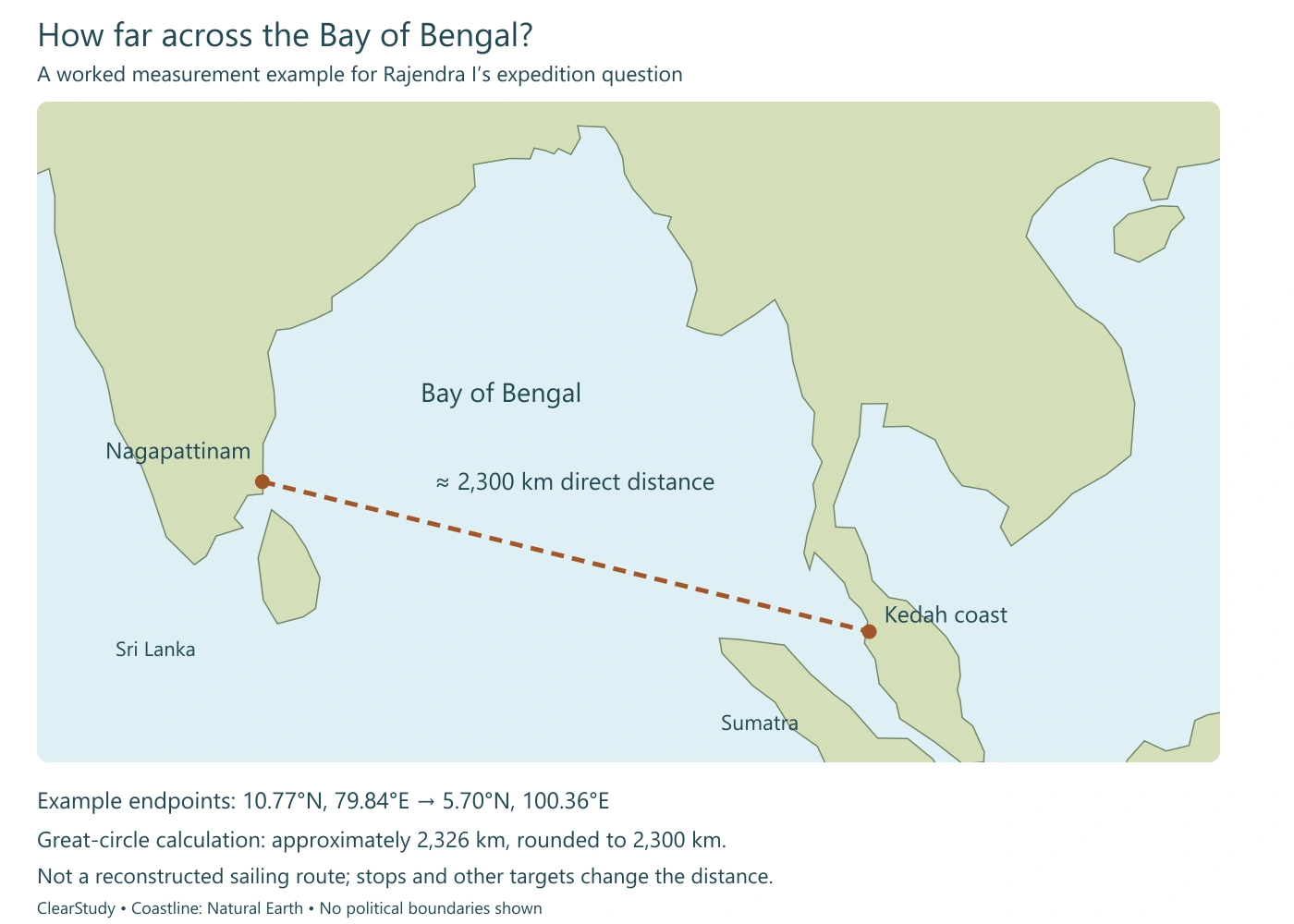
5. Match these two pairs:
(a) Eastern Gangas (b) Chandellas (c) Paramāras (d) Hoysalas (e) Cholas
(i) Belur (ii) Bṛihadīśhvara temple (iii) Konark Sun temple (iv) Kandāriyā Mahādeva temple (v) Bhojeshwar temple
6. Working in groups, compare the dynasties in this chapter and in the preceding one; create a table to list the dynasties present in both, those that disappear from the preceding period, and those that appear in this chapter’s period.
7. Using the chapter and any additional reading, prepare a short note explaining (1) why centres of learning like Nālandā were important; (2) how their destruction may have affected education and culture in India.
8. Why do you think Mahmūd of Ghazni carry out repeated raids from Afghanistan into India, while Muhammad Ghūrī sought territorial expansion into India and long-term control? Write a short note on how their motives shaped the outcomes of their campaigns.
Extra Practice Questions
These questions and MCQs are ClearStudy practice, separate from the NCERT exercise.
Short Answer Type Questions
Q1. Who were the Hindu Shāhis, and why was their resistance important?
Q2. What does the word ‘sultan’ mean, and who first assumed this title in the chapter?
Q3. Why was Rājendra Chola I given the title ‘Gangaikondachola’?
Q4. What is the legend behind the name ‘Hoysala’?
Q5. Name three famous works of Bhāskarāchārya and say what they deal with.
Long Answer Type Questions
Q1. Describe the achievements of the Cholas as ‘masters of the seas’.
Q2. Trace the entry of the Ghūrids into India and explain why it was a turning point.
Q3. How did governance, trade and cultural life continue to flourish in this period despite the warfare?
MCQs & Assertion–Reason
1. Which mountain pass, controlled by the Hindu Shāhis, was a major route into the Subcontinent?
(a) Bolan Pass (b) Khyber Pass (c) Nathu La (d) Shipki La
2. How many campaigns does the NCERT chapter attribute to Mahmūd of Ghazni?
(a) 7 (b) 12 (c) 17 (d) 27
3. The Persian scholar who accompanied Mahmūd and wrote an encyclopaedic survey of India was:
(a) al-Utbi (b) al-Bīrūnī (c) Minhaj al-Siraj (d) Merutunga
4. Līlāvatī, Bījagaṇita and Siddhāntaśhiromaṇi were written by:
(a) Āryabhaṭa (b) Brahmagupta (c) Bhāskarāchārya (d) Varāhamihira
5. Rājendra Chola I’s famous naval expedition was directed against the:
(a) Śhrīvijaya Empire (b) Ghaznavids (c) Khmer kingdom (d) Pālas
6. The Hoysala temples of Belur and Halebidu are located in present-day:
(a) Tamil Nadu (b) Telangana (c) Karnataka (d) Maharashtra
7. In the Second Battle of Tarain (1192), Muhammad Ghūrī defeated:
(a) Mūlarāja II (b) Pṛithvīrāja III (c) Bhoja Paramāra (d) Vijayabāhu I
8. Which commander does the NCERT chapter associate with attacks on Nālandā and Vikramaśhilā?
(a) Qutb-ud-din Aibak (b) Bakhtiyār Khiljī (c) Sālār Masūd (d) Jayapāla
9. The Kākatīyas had their capital at:
(a) Dhārā (b) Nādīya (c) Orugallu (Warangal) (d) Ajayameru
10. Who founded the Lingāyat movement, which rejected caste distinctions and ritualism?
(a) Rāmānujāchārya (b) Jayadeva (c) Ādi Śhankarāchārya (d) Basaveśhvara
For each Assertion–Reason question, choose: (A) Both true and the Reason correctly explains the Assertion; (B) Both true but the Reason is not the correct explanation; (C) Assertion true, Reason false; (D) Assertion false, Reason true.
A-R 1. Assertion: Mahmūd of Ghazni did not establish a permanent base in India beyond Punjab.
Reason: His campaigns were aimed mainly at plunder, after which he returned to Ghazni with booty.
A-R 2. Assertion: The arrival of the Ghūrids marked a turning point in Indian history.
Reason: Unlike Mahmūd, Muhammad Ghūrī sought territorial conquest, and his generals founded the Delhi Sultanate.
A-R 3. Assertion: All of India came under Turkic rule in the 11th and 12th centuries.
Reason: Large parts of northern India and all of south India remained outside the invaders’ hold.
A-R 4. Assertion: The destruction of Nālandā is linked to the decline of Buddhism in India.
Reason: Loss of monastic institutions, manuscripts and teaching networks weakened Buddhist education in affected regions.
A-R 5. Assertion: Indian culture spread abroad during this period.
Reason: The Angkor Wat temple, built in 12th-century Cambodia, shares many features with south Indian temples.
In-text mathematics: let the elephant herd be x. The groups occupy x/2 + x/6 + x/6 + x/42 + x/8 + x/72 = 125x/126. The remaining king and three female elephants give x/126 = 4, so x = 504. Check: 336 in the cave, 96 at the river, 68 at the pond and 4 remaining.
Source activities: a narrow mountain pass can shorten a crossing but create bottlenecks and ambush risks. Al-Biruni’s praise of opponents shows why accounts should be read carefully rather than assuming every writer simply praises his own side. Shaven heads and books suggest a monastic learning centre in the quoted chronicle, but do not by themselves securely name the site.
Chronology checks: the Konark Sun Temple belongs to the thirteenth century, although its dynasty appears here. Not every monument mentioned dates to the chapter’s two centuries. Treat later portraits and modern statues as later representations.
Discussion: an inclusive modern discussion forum could address education, discrimination, water access and public services, with equal speaking opportunities and respectful disagreement. Angkor Wat shows Khmer creativity and adaptation of religious ideas, not Indian political rule over Cambodia.
Historical terms: Ghurid origins should be distinguished from the origins of their commanders. Medieval campaigns do not make present-day religious or ethnic communities responsible for those events.
Reviewed against NCERT Exploring Society: India and Beyond, Class 7, Part 2, Chapter 4, pp. 97–124 (first edition, November 2025). Review date: 10 October 2026.
Exam Tips & Common Mistakes
How to write a clear answer
Memorise the key dates from the timeline (Mahmūd’s campaigns against the Hindu Shahis 1000–08, Somnath 1026, Second Battle of Tarain 1192, deaths in 1206) and match each dynasty to its region and signature monument (Cholas–Bṛihadīśhvara, Chandellas–Kandāriyā Mahādeva, Hoysalas–Belur/Halebidu, Kākatīyas–Warangal, Eastern Gangas–Konark/Puri, Paramāras–Bhojeshwar). For the central question, always frame the period as both change (Turkic conquest, spread of Islam) and continuity (free south India, thriving trade and culture). Use precise names — Mahmūd of Ghazni vs Muhammad Ghūrī, Bhoja Paramāra vs Bhoja Gurjara-Pratīhāra, Chaulukya vs Chālukya — to show you have read carefully.
Common mistakes to avoid
- Confusing Mahmūd of Ghazni (11th century, raids and plunder) with Muhammad Ghūrī (12th century, territorial conquest).
- Mixing up the Chaulukyas (Solankis) of Gujarat with the Chālukyas of the Deccan.
- Confusing Bhoja Paramāra (11th-century scholar-king of Malwa) with Bhoja of the Gurjara-Pratīhāras (9th century).
- Writing that all of India fell to the invaders — most of the north and all of the south stayed free.
- Forgetting that the period also saw great continuity — thriving trade, art, science and temple-building.
- Leaving map/drawing/group activities (Q2–Q4, Q6) blank — list the dynasties, places or distances instead.
Frequently Asked Questions
What is Part 2 Chapter 4 of Class 7 Social Science Exploring Society about?
Part 2 Chapter 4, Turning Tides: 11th and 12th Centuries, explains why this period was a turning point in Indian history — the deeper Turkic invasions of Mahmūd of Ghazni and Muhammad Ghūrī, the rise of Indian powers like the Cholas, Kākatīyas and Hoysalas, and the flowering of art, architecture, literature and science despite the warfare.
What is the difference between Mahmūd of Ghazni and Muhammad Ghūrī?
Mahmud carried out repeated raids beyond his Punjab base, while Ghaznavid rule continued in Punjab. Muhammad of Ghor pursued wider conquest, and his commanders consolidated control that led to the Delhi Sultanate. Both sought political power and resources.
What is the exercise heading for Part 2 Chapter 4 of Exploring Society?
The end-of-chapter exercise in Exploring Society: India and Beyond (Part 2) Part 2 Chapter 4 is headed Questions and activities and contains 8 questions, all answered step by step on this page along with the chapter’s opening “Big Questions”.