
Class 8 Social Science Chapter 7 Solutions – Factors of Production
These Class 8 Social Science Chapter 7 solutions cover Factors of Production from Exploring Society: India and Beyond (Part I), the NCERT textbook first published in July 2025 and reprinted for 2026–27. The chapter belongs to the theme Economic Life Around Us and explains how every product we use is made by combining four key inputs — land, labour, capital and entrepreneurship — supported by technology. Below you get step-by-step answers to all Questions and activities, clear notes on key terms, extra practice, MCQs, Assertion–Reason and FAQs.
Class 8 Social Science Chapter 7 Solutions: Overview
Chapter 7, Factors of Production, introduces the basic idea of how goods and services are produced. Using the relatable example of Ratna, who runs a small highway restaurant called Pause Point, it shows that every business combines inputs to create output. Economists group these inputs into four factors of production — land (natural resources), labour (human effort), capital (money and human-made assets) and entrepreneurship (the risk-taking organiser) — with technology acting as a powerful enabler. The chapter also explores human capital and its facilitators (education, healthcare, social and cultural influences), India’s rich skill heritage such as stitched shipbuilding, how the factors are interconnected through supply chains, and the responsibilities producers have towards natural resources and workers, including Corporate Social Responsibility (CSR).
Key Concepts & Terms
Factors of production: the resources or inputs used to produce goods and services. They are classified into four types — land, labour, capital and entrepreneurship.
Land (natural resources): not just geographical land but all natural gifts — soil, forests, water, air, sunlight, minerals, oil and natural gas. Businesses buy land or pay rent to use it.
Labour (human resources): the physical and mental effort used in production. Carpenters, farmers, teachers and doctors all contribute labour at different levels of strength, knowledge and skill.
Capital: the textbook uses a broad meaning that includes finance and human-made resources for production. Physical capital includes tools, machinery and buildings; these can be owned or rented. Working capital includes raw materials and funds for day-to-day operations. Money helps purchase inputs; it is not itself a machine producing goods. Human capital refers separately to people’s knowledge and capabilities.
Entrepreneurship: starting one’s own business or creating something new to solve a problem. An entrepreneur identifies a problem, takes risks, combines the other factors and makes key decisions.
Technology: knowledge, methods and tools applied to tasks. In this chapter’s four-factor framework it is an enabler of production. It can improve output, quality or safety, but its benefits depend on access, training, maintenance and suitable use; a newer tool is not automatically better for every task.
Human capital: people’s knowledge, skills, experience and capabilities that support productive work. Education, training and health can develop these capabilities. Human capital is not a measure of a person’s dignity or worth; people with disabilities or illness can contribute when barriers are removed and suitable support is available.
Facilitators of human capital: education and training, healthcare, and supportive social and workplace conditions. Kaizen illustrates continuous improvement; punctuality and attention to quality are learned practices found in many societies, not inherent traits of every person from a particular country.
Other key terms: Interest is the cost a borrower pays for using borrowed money. A dividend is a distribution a company may declare to shareholders; payment is not guaranteed. Companies can raise equity by issuing new shares; trading existing shares between investors does not itself provide fresh funds to the company. A startup is a new venture, often seeking an innovative, scalable model. A demographic dividend is a potential economic benefit from a favourable working-age share of the population, dependent on health, skills and jobs. A supply chain connects input suppliers, production, transport and sales. CSR means Corporate Social Responsibility.
The Big Questions
1. What are the factors of production?
Land, labour, capital and entrepreneurship are the chapter’s four groups of inputs. Technology enables their use; human capital refers to people’s knowledge and capabilities.
2. How are these factors interconnected?
Resources, effort, equipment and coordination work together. A shortage can obstruct production, while different methods or suppliers can sometimes substitute for a particular input. Supply chains connect the stages and places involved.
3. What is human capital, and what supports it?
Human capital includes knowledge, skill, experience and capability. Education, practical training, healthcare, supportive social conditions and opportunities to use these skills help develop it.
Think About It and Let’s Explore: Activity Guidance
These are model approaches to the textbook’s in-text prompts. Use your own observations and research where required; imagined examples are not historical documents or actual survey findings.
| Textbook prompt | Model explanation or approach |
|---|---|
| Local shops and their inputs (p. 165) | Observe a few businesses with permission. Record type, goods/services and inputs; a shop sells goods it may not manufacture itself. Ask how skills and finance were obtained without requesting private accounts. Use your own counts, not the sample table’s numbers as local findings. |
| Which inputs are “land”? (p. 166) | Identify the site, naturally available water and other natural resources. Distinguish a plot from a building and natural ores from manufactured steel. Bought ingredients, tools and equipment need classification by their role in the business, not just their natural origin. |
| Healthcare and human capital (p. 168) | Accessible prevention, treatment and rehabilitation can support school attendance, learning and participation in work. Safe water, nutrition, transport and accessible facilities also matter. Do not infer a person’s ability solely from illness or disability. |
| Workplace-culture interviews (p. 169) | Ask ten willing adults about cooperation, safety, punctuality, respect, learning and improvement. Count repeated adjectives, record the sample size and acknowledge that a small convenience sample is not representative of all workplaces. Do not record employer-identifying complaints without permission. |
| Historical art and architecture (p. 169) | Consider apprenticeship, design knowledge, teamwork, patronage, materials, tools, experience and sustained practice. Excellence came from many linked inputs rather than one community’s inherent talent. |
| Shivay’s lost schooling; skills shortage (p. 170) | Interrupted schooling may reduce learning and later options, but the outcome is not fixed. Re-entry, bridge learning, financial support and training can help. A business lacking required skills may face delays, errors or training costs; better recruitment and apprenticeships can respond. |
| Dignity of different jobs (p. 170) | Sanitation, farming, healthcare, teaching and other work meet different essential needs. Their interdependence becomes clear if a service stops. Pay, prestige and formal qualifications do not determine human dignity. |
| Indigenous techniques and local craft (pp. 171–172) | Investigate changing demand, trade, new materials, competition, policy and transmission of skills; decline is rarely explained by one cause alone. Describe a craft from your region and distinguish an observation from a claim about its entire history. INSV Kaundinya illustrates revival of stitched construction. |
| Factory capital estimate (p. 173) | List building, machinery, tools, utilities and operating inputs. Use a published project cost or a clearly labelled estimate with date, assumptions and range. A photograph cannot establish an exact investment, and an estimate is not the owner’s verified accounts. |
| J.R.D. Tata and entrepreneurship (p. 175) | Possible lessons include long-term planning, learning, attention to workers and combining commercial goals with social responsibility. Existing knowledge helps, but entrepreneurs also consult specialists and research. Profit, service, independence and solving problems can all motivate a venture. No set of personality traits guarantees success. |
| Technology and your invention (pp. 176–178) | Compare one older and newer method, such as letters and email, including cost, access and skills. Sketch a problem-solving idea with name, purpose, operation, materials and users. State that it is a concept; test claims and consider maintenance, accessibility and waste. |
| Mobile-phone production flow (p. 179) | Identify labour and knowledge in design, assembly, software, testing and distribution; capital in factory equipment; natural resources underlying materials; and organisation in coordinating the chain. A diagram summarises connected processes rather than proving one rigid chronological sequence for every manufacturer. |
| Communities and biodiversity (pp. 180–181) | Polluted water or soil can affect health, livelihoods, crops and wildlife. Observe safely and use verified records; never enter an unsafe site or identify a polluter from appearance alone. Treatment, responsible material use and suitable recycling can reduce harm. CSR does not replace compliance with environmental or worker-protection duties. |
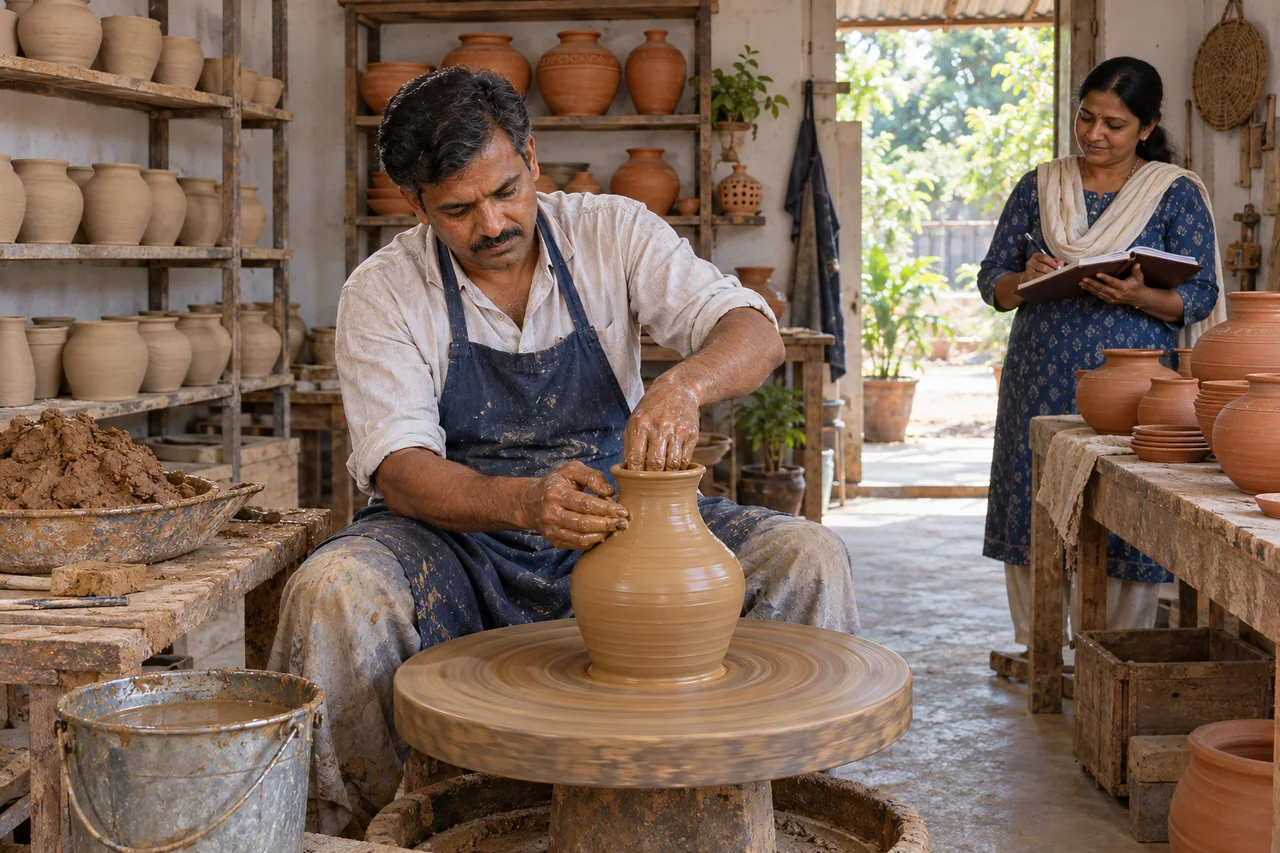
“Questions and activities” — Full Solutions
All questions below are reproduced verbatim from the NCERT textbook’s end-of-chapter Questions and activities section. Answers are original, written in exam-ready style.
1. How are the factors of production different from each other? What are the difficulties you faced in classifying the factors of production in the exercise given in-text?
2. How does human capital differ from physical capital?
3. How do you think technology is changing how people develop their skills and knowledge?
4. A skill is something you learn and practice to get better. It helps you do things well, like playing a sport, creative writing, solving math problems, cooking, or even communicating well with people. If you could learn one skill today, what would it be and why?
5. Do you think entrepreneurship is the ‘driving force’ of production? Why or why not?
6. Can technology replace other factors like labour? Is this good or bad? Support your answer with the help of an example.
7. How do education and skill training affect human capital? Can they substitute for each other, or do they complement each other?
8. Imagine you want to start a business that produces steel water bottles. What kind of inputs are needed? How would you obtain them? Suppose one of the factors is missing; what happens to your business operations?
| Bottle-production input | Classification in this example |
|---|---|
| Factory site; naturally available water | Land/natural resources |
| Work of trained machine operators | Labour; their skill is human capital |
| Forming machines, dies and building | Fixed physical capital |
| Purchased steel sheets and packing materials | Processed material inputs/working capital |
| Planning, coordination and risk decisions | Entrepreneurship |
9. Interview an entrepreneur or founder to understand their motivation to start a business and the opportunities and challenges they saw. You can work in pairs to create a questionnaire to collect the information and share what you have learned in a report.
Ask permission for the interview and for any quotation used in your report. Do not request bank details, private documents or exact income if the person is uncomfortable. Record the business type, interview date, motivation, inputs, one opportunity, one challenge and what you learned. Distinguish their statements from your interpretation; never present an invented interview as research.
10. Think like an economist. Let’s explore what happens when things change. If you were Ratna, what would you do in the following situations? Discuss with your classmates.
I. Suppose the rent for your space suddenly doubles. — Will you raise the price of the food served to cover the costs? Will you look for a cheaper location? How does this affect your business?
II. Imagine one of your helpers quits suddenly. — Can the remaining workers manage the same amount of work? Will you need to offer a higher salary to attract a new worker?
III. You receive a small loan to invest in better technology for your restaurant. — Will this increase the production or improve quality? Will it help you reach more customers?
IV. Suppose another restaurant opens in the neighbourhood. — How will you attract and keep your customers? Will you improve your service, reduce prices, or offer something new?
V. What government laws or rules should be changed to improve the ease of doing business?
Extra Practice Questions
These questions and MCQs are ClearStudy practice, separate from the NCERT exercise.
Short Answer Type Questions
Q1. What are factors of production? Name the four types.
Q2. What is meant by ‘land’ in economics?
Q3. Who is an entrepreneur?
Q4. What is a demographic dividend?
Q5. What is Corporate Social Responsibility (CSR)?
Long Answer Type Questions
Q1. Explain the facilitators of human capital with examples.
Q2. How are the factors of production interconnected? What role does the supply chain play?
Q3. Describe India’s ancient skill heritage with an example.
MCQs & Assertion–Reason
1. The resources or inputs used to produce goods and services are called:
(a) products (b) factors of production (c) services (d) profits
2. Which of the following is NOT one of the four factors of production?
(a) Land (b) Labour (c) Technology (d) Entrepreneurship
3. In economics, the word ‘land’ includes:
(a) only farmland (b) only buildings (c) all natural resources like water, minerals and forests (d) only city plots
4. Machinery, tools, vehicles and money used in a business are examples of:
(a) land (b) labour (c) capital (d) technology
5. Human capital mainly refers to:
(a) the number of workers (b) the skills, knowledge and expertise of people (c) factory machines (d) bank loans
6. The amount paid by a borrower to a lender for using their money is called:
(a) dividend (b) interest (c) profit (d) rent
7. A distribution from profits that a company may declare to its shareholders is called:
(a) interest (b) rent (c) dividend (d) wage
8. A person who takes risks, combines factors of production and starts a new venture is a/an:
(a) employee (b) entrepreneur (c) customer (d) shareholder
9. The CSR provisions under India’s Companies Act, 2013 became effective in:
(a) 2008 (b) 2014 (c) 2017 (d) 2020
10. The benefit a country gets from having a large number of young, working people is called:
(a) supply chain (b) demographic dividend (c) human capital (d) productivity
For each Assertion–Reason question, choose: (A) Both true and the Reason correctly explains the Assertion; (B) Both true but the Reason is not the correct explanation; (C) Assertion true, Reason false; (D) Assertion false, Reason true.
A-R 1. Assertion: The factors of production are interconnected.
Reason: If one factor is missing or misused, production can become inefficient or even halt.
A-R 2. Assertion: Human capital is the same as physical capital.
Reason: Human capital is the knowledge and skills of people, while physical capital is human-made assets like machinery.
A-R 3. Assertion: Technology can completely replace all other factors of production.
Reason: Humans design, maintain and improve technologies, even when particular production tasks are automated.
A-R 4. Assertion: Good health is a facilitator of human capital.
Reason: Healthy children attend school regularly and healthy workers can do more in less time.
A-R 5. Assertion: Eligible companies can raise fresh equity capital by issuing new shares to the public.
Reason: In a new issue, investors buy shares issued by the company and provide funds to it.
Exam Tips & Common Mistakes
How to write a clear answer
Always name the four factors clearly — land, labour, capital, entrepreneurship — and remember that in this chapter’s four-factor framework technology is discussed as an enabler/facilitator. When asked to compare, use a two-sided structure (e.g. human capital = skills/knowledge of people; physical capital = human-made assets). Support opinion questions (Q4, Q5, Q10) with a clear reason and a real example. Use the textbook’s own examples — Ratna’s restaurant, stitched shipbuilding, SWAYAM, J.R.D. Tata, the 2014 CSR law — to show you have studied the chapter.
Common mistakes to avoid
- Using a different framework without explanation: NCERT groups four factors here and discusses technology as an enabler.
- Confusing human capital (skills and knowledge) with labour (effort) or with physical capital (machines).
- Mixing up interest (paid on a loan) with dividend (paid to shareholders).
- Thinking “land” means only soil or plots — it covers all natural resources.
- Leaving activity-based questions (Q9, Q10) blank — write your own reasoned response or report.
- Forgetting to give an example when the question asks for one (Q6).
Frequently Asked Questions
What are the four factors of production in Class 8 Social Science Chapter 7?
The four factors of production are land (natural resources), labour (human effort), capital (money and human-made assets such as machinery and buildings) and entrepreneurship (the risk-taking organiser who combines the other factors). Technology acts as an enabler that helps produce more with the same or fewer inputs.
What is the difference between human capital and physical capital?
Physical capital consists of produced assets used in work, such as tools, machines and buildings, whether owned or rented. Human capital is people’s knowledge, skills, experience and capabilities, developed through learning, practice and health support. Both contribute to production.
What is the exercise heading for Chapter 7 of Exploring Society?
The end-of-chapter exercise in Exploring Society: India and Beyond Chapter 7 is headed Questions and activities and contains 10 numbered questions, all answered step by step on this page.
Official checks: SWAYAM course and certificate FAQs; SEBI on shares and dividends; SEBI on primary and secondary markets; MCA CSR FAQs; CSR commencement in 2014. Connect responsible production with Chapter 1: Natural Resources and Their Use.
Textbook reference: NCERT Chapter 7, Exploring Society: India and Beyond, Grade 8, Part I (2026–27 reprint). Answers and illustrations on this page are original ClearStudy learning aids. Reviewed 10 October 2026.