
NCERT Solutions for Class 6 Social Science (Exploring Society) Chapter 8: Unity in Diversity, or ‘Many in the One’ (NCERT 2026–27)
These Class 6 Social Science Exploring Society Chapter 8 solutions cover Unity in Diversity, or ‘Many in the One’ from Exploring Society: India and Beyond, the NCERT textbook (2026–27 reprint). The chapter shows how India’s amazing variety of foods, dresses, festivals, languages and literature is bound together by a deep, shared unity — the idea of the ‘Many in the One’. Below you get step-by-step answers to all the Questions, activities and projects, clear notes on key terms, extra practice, MCQs, Assertion–Reason questions and FAQs.
Class 6 Social Science Exploring Society Chapter 8 – Overview
Chapter 8, Unity in Diversity, or ‘Many in the One’, explores one of India’s most special features. If you travel across India by train, you notice changing landscapes, dresses, foods, languages and scripts — this is India’s rich diversity, the first thing that strikes most visitors. The ‘People of India’ project of the Anthropological Survey of India studied 4,635 communities and counted 325 languages written in 25 scripts. Yet beneath all this variety lies a deep unity. The chapter shows this through everyday life: the same staple grains and spices are combined in endless ways (food); the single unstitched sari comes in hundreds of varieties (textiles); Makara Sankrānti and similar seasonal festivals are celebrated around mid-January with regional names and customs (festivals); and shared stories like the Pañchatantra and the great epics, the Rāmāyaṇa and Mahābhārata, take countless regional and tribal forms (literature). In every case, ‘one’ becomes ‘many’ without losing its underlying oneness. The big idea is that in India, diversity does not divide — it enriches the underlying unity.
The language and community counts below belong to the late-20th-century People of India project cited in NCERT. They are historical survey findings.
Key Concepts & Terms
Unity in diversity: the idea that India has enormous variety in its people, languages, foods, dresses, festivals and customs, yet all of this is held together by a deep, shared unity — the ‘Many in the One’.
Diversity: the great variety we see across India — different landscapes, dresses, foods, languages, scripts, customs and traditions. The ‘People of India’ project counted 4,635 communities, 325 languages and 25 scripts.
People of India project: a massive survey conducted in the late 20th century by the Anthropological Survey of India (directed by the anthropologist K.S. Singh) which documented thousands of communities and India’s many languages and scripts.
Migrants: people who do not live near their birthplace or with their original community. The survey noted that many Indians may be called migrants in this sense.
Staple grains: the basic foods eaten by most Indians — cereals (rice, barley, wheat), millets (bajra, jowar, ragi) and pulses (various dals, rajma, gram). Common spices like turmeric, cumin, cardamom and ginger are used across the country.
Sari: a plain, unstitched length of cloth worn in most parts of India. It comes in hundreds of varieties (Banarasi, Kanjivaram, Paithani, Patan Patola, Muga, Mysore) and many ways of draping, yet remains a single dress — a perfect example of unity and diversity.
Chintz: a beautiful printed cotton from India that became so popular in 17th-century Europe that England and France banned its import to protect their own products.
Makara Sankrānti: a festival celebrated around 14 January. NCERT compares it with related seasonal celebrations such as Lohri, Magh Bihu, Pongal and Uttarayan. Dates, meanings and customs differ; these are not identical festivals.
Pañchatantra: a collection of delightful stories (mostly with animals as characters) that teach life skills. The Sanskrit text is at least 2,200 years old; about 200 adaptations exist in more than 50 languages.
Epic: a long poem that narrates the adventures of heroes and other great figures of the past. India’s two great epics are the Rāmāyaṇa and the Mahābhārata.
Relief: a design that stands out from the surface of a panel, which may be of stone, wood, ceramic or another material (for example, the stone relief of a woman in a sari from Vaiśhāli).
Dharma: the idea of right conduct or moral order that the heroes of the epics fight to re-establish.
“Questions, activities and projects” — Full Solutions
These solutions follow NCERT’s end-of-chapter questions. Answers and teaching illustrations are ClearStudy explanations; personal and group activities use model responses to adapt.
1. Conduct a class discussion on the two quotations at the start of the chapter.
2. Select a few stories from the Pañchatantra and discuss how their message is still valid today. Do you know of any similar stories from your region?
3. Collect a few folk tales from your region and discuss their message.
4. Is there any ancient story that you have seen being depicted through a form of art? It could be a sculpture, a painting, a dance performance, a movie … Discuss with your classmates.
5. Discuss in class the following quotation by India’s first prime minister, Jawaharlal Nehru, when he travelled to many parts of India before Independence:
“Everywhere I found a cultural background which had exerted a powerful influence on their lives. … The old epics of India, the Ramayana and the Mahabharata and other books, in popular translations and paraphrases, were widely known among the masses, and every incident and story and moral in them was engraved on the popular mind and gave a richness and content to it. Illiterate villagers would know hundreds of verses by heart and their conversation would be full of references to them or to some story with a moral, enshrined in some old classic.”
“The Big Questions” — Answered
These are the three guiding questions printed at the start of the chapter. Answering them is a great way to revise the whole chapter.
1. What is meant by ‘unity in diversity’ in the Indian scenario?
2. What aspects of India’s diversity are the most striking?
3. How do we make out the unity underlying the diversity?
Try the in-text sari activity
Explain how the sari reflects unity and diversity (100–150 words).
The sari shows how one form of clothing can have many expressions. Its basic form is a long, unstitched piece of cloth, worn in many parts of India. This common form represents unity. Diversity appears in its materials, colours, patterns, weaving techniques and ways of draping. A sari may be made of cotton, silk or a synthetic fabric. NCERT mentions varieties such as Banarasi, Kanjivaram, Paithani and Patan Patola. Communities also drape the cloth differently for everyday life, work or special occasions. New styles continue to develop. Thus the sari does not require everyone to look the same: a shared form allows people to express regional traditions and personal choices.
Extra Practice Questions
These questions and MCQs are ClearStudy practice, separate from the NCERT exercise.
Short Answer Type Questions
Q1. What did the ‘People of India’ project find about India’s languages and communities?
Q2. How does the sari show both unity and diversity?
Q3. What is Makara Sankrānti, and what does it tell us about Indian festivals?
Q4. Why was chintz important, and what did England and France do about it?
Q5. How do the two epics, the Rāmāyaṇa and the Mahābhārata, illustrate unity in diversity?
Long Answer Type Questions
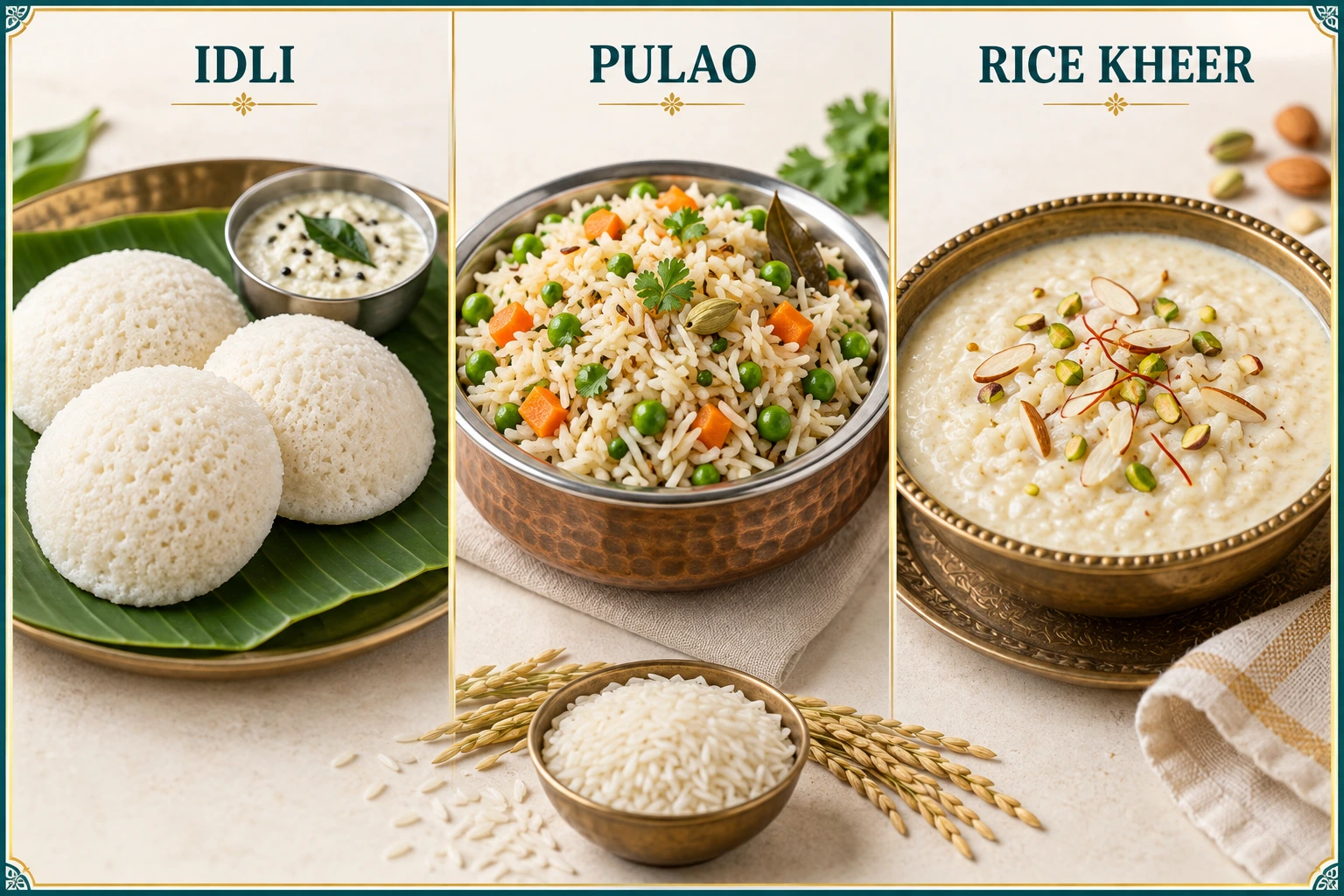
Q1. Explain how food in India shows unity in diversity.
Q2. Describe how the Pañchatantra and the great epics spread across India and beyond, and why this is an example of unity in diversity.
Q3. ‘In India, diversity does not divide — it enriches.’ Discuss this statement using examples from the chapter.
MCQs & Assertion–Reason
1. The phrase ‘Many in the One’ in this chapter refers to:
(a) India’s population (b) unity in diversity (c) the number of states (d) the number of festivals
2. The ‘People of India’ project counted how many languages?
(a) 225 (b) 325 (c) 425 (d) 525
3. Which of these is a ‘staple grain’ common to most parts of India?
(a) Saffron (b) Cardamom (c) Rice (d) Chintz
4. The sari is best described as a:
(a) stitched dress (b) plain, unstitched length of cloth (c) type of spice (d) printed cotton banned in Europe
5. ‘Chintz’ was a type of:
(a) silk sari (b) printed cotton (c) festival (d) script
6. Makara Sankrānti is celebrated on or around which date?
(a) 1 January (b) 14 January (c) 26 January (d) 15 August
7. Which festival does NCERT compare with Makara Sankrānti as a related mid-January celebration?
(a) Pongal (b) Diwali (c) Holi (d) Eid
8. The Pañchatantra is a collection of stories mainly featuring:
(a) kings and queens (b) animals (c) gods (d) traders
9. India’s two great epics are the:
(a) Pañchatantra and Hitopadeśa (b) Rāmāyaṇa and Mahābhārata (c) Vedas and Upanishads (d) Jataka and Panchatantra
10. Which communities are mentioned as having their own tribal versions of the epics?
(a) Bhils, Gonds and Mundas (b) Cholas and Pandyas (c) Mauryas and Guptas (d) Aryans and Dravidians
For each Assertion–Reason question, choose: (A) Both true and the Reason correctly explains the Assertion; (B) Both true but the Reason is not the correct explanation; (C) Assertion true, Reason false; (D) Assertion false, Reason true.
A-R 1. Assertion: India shows unity in diversity.
Reason: India has great variety in languages, foods and festivals, yet a deep unity binds them together.
A-R 2. Assertion: The sari is an example of unity in diversity.
Reason: The sari is a single unstitched cloth that comes in hundreds of varieties and ways of draping.
A-R 3. Assertion: Makara Sankrānti is celebrated only in one part of India.
Reason: Makara Sankrānti is observed in several regions, and NCERT compares it with similar festivals around mid-January.
A-R 4. Assertion: The Pañchatantra stories are found only in Sanskrit.
Reason: About 200 adaptations of the Pañchatantra exist in more than 50 languages.
A-R 5. Assertion: The two great epics created a web of shared culture across India.
Reason: For more than two millenniums they have been adapted into countless regional and tribal versions.
Exam Tips & Common Mistakes
How to write a clear answer
Remember the central idea — unity in diversity, the ‘Many in the One’. For any answer, give one example of diversity (the many) and the matching unity (the one) underneath it. Learn the key facts — 4,635 communities, 325 languages, 25 scripts, the sari, Makara Sankrānti around 14 January, the Pañchatantra (about 200 adaptations in over 50 languages) and the two epics. Use the chapter’s four areas — food, dress, festivals and literature — as ready-made examples. Always end with the chapter’s big message: diversity does not divide, it enriches.
Common mistakes to avoid
- Writing only about diversity and forgetting to explain the unity behind it (or the other way round).
- Assuming all mid-January festivals are identical: NCERT links similar seasonal celebrations, each with regional customs.
- Confusing chintz (printed cotton) with silk saris like Banarasi or Kanjivaram.
- Forgetting that the epics also have countless folk and tribal versions (Bhils, Gonds, Mundas).
- Mixing up the figures — it is 325 languages and 25 scripts, from 4,635 communities.
- Leaving activity questions blank — write your own examples and regional stories.
Frequently Asked Questions
What is Chapter 8 of Class 6 Social Science Exploring Society about?
Chapter 8, Unity in Diversity, or ‘Many in the One’, explains how India’s great variety of foods, dresses, festivals, languages and literature is held together by a deep, shared unity. It uses examples like staple grains, the sari, Makara Sankrānti and the epics to show how ‘one’ becomes ‘many’ without losing its oneness.
What does ‘unity in diversity’ mean in the Indian context?
It means India has enormous variety in its people, languages, foods, dresses, festivals and customs (diversity), but underneath all of this lies a deep, shared unity that binds the whole country together — what the chapter calls the ‘Many in the One’.
What is the exercise heading for Chapter 8 of Exploring Society?
The end-of-chapter exercise in Exploring Society: India and Beyond Chapter 8 is headed Questions, activities and projects and contains 5 items, all answered step by step on this page, along with answers to the three ‘Big Questions’.
Reviewed against NCERT, Exploring Society: India and Beyond, Chapter 8 (2026–27 reprint). Content reviewed 9 October 2026.